
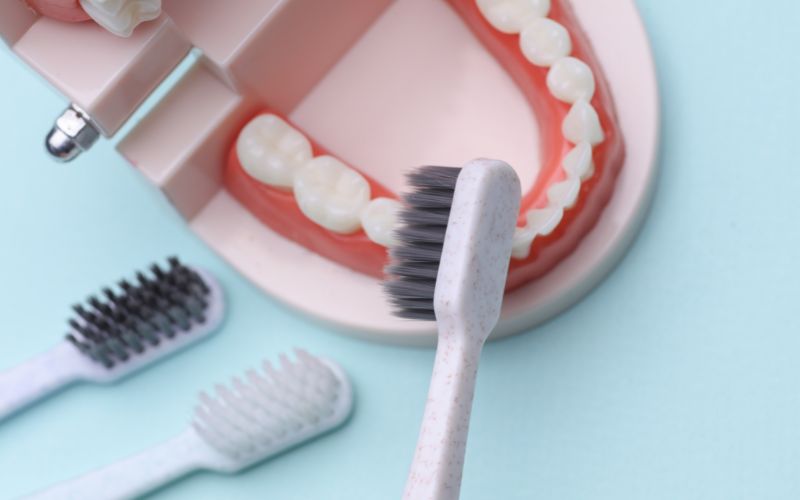
Dental implants boast an incredible success rate of over 95%, making them the gold standard for replacing missing teeth. Because they mimic the structure of natural teeth, they allow you to eat, speak, and smile with absolute confidence. However, a common misconception among patients is that because titanium posts and porcelain crowns cannot develop dental decay, they are completely immune to failure.In reality, the lifespan of your restoration is directly tied to the health of the living tissues supporting it. Excellent oral hygiene isn’t just about keeping your breath fresh or your smile bright,it is the single most critical factor determining whether your investment lasts a few years or a lifetime.
The Biological Link Between Hygiene and Implant Lifespan
When you lose a tooth, a dental implant replaces both the visible crown and the hidden root. Through a biological process called osseointegration, your jawbone fuses directly with the titanium post, locking it securely into place. This bond provides unmatched stability, but it differs significantly from the anatomy of a natural tooth. Natural teeth are suspended in the jaw by a complex system called the periodontal ligament (PDL). The PDL acts as a shock absorber, but more importantly, it contains a rich blood supply filled with immune cells that actively fight off bacterial invasion.
Because an implant integrates directly into the bone, it lacks this periodontal ligament and its built-in immune defense system. The junction where your implant crown meets your gums relies entirely on a tight sealing of the soft tissue. If plaque is allowed to accumulate at this delicate baseline, bacteria can breach the seal much more easily than they could around a natural tooth, rapidly compromising the underlying bone structure.
The Path to Infection: Two Stages of Implant Gum Disease
When daily oral hygiene habits slip, bacteria form a sticky, invisible biofilm around the restoration. If left undisturbed, this biofilm triggers a destructive immune response that progresses through two distinct clinical stages:
1. Peri-Implant Mucositis (The Reversible Stage)
This is the direct equivalent of gingivitis around a natural tooth. Bacteria cause inflammation, redness, and swelling in the soft gum tissues surrounding the implant. You will likely notice bleeding when you brush or floss, and the gums may feel tender to the touch.
- The Clinical Status: At this stage, the inflammation is strictly limited to the soft tissue. There is no permanent damage to the bone holding the implant.
- The Solution: Peri-implant mucositis is fully reversible. With an improved home care routine and a thorough professional dental cleaning, the tissues can completely heal.
2. Peri-Implantitis (The Danger Zone)
If mucositis is ignored, the bacterial biofilm matures and moves deeper beneath the gumline. This triggers peri-implantitis, a chronic inflammatory condition that directly attacks the structural foundation of your restoration.
- The Clinical Status: The chronic infection forces the jawbone holding the implant to recede and break down. As this vital bone support vanishes, deep pockets form around the implant, trapping even more destructive bacteria.
- The Outcome: Once bone loss progresses significantly, the titanium post loses its grip, becomes loose, and will eventually fail or require surgical removal if targeted specialist intervention is not performed immediately.
How Poor Hygiene Shortens Implant Lifespan
A lack of consistent maintenance creates a destructive chain reaction in the oral cavity. Understanding this timeline highlights why daily care is completely non-negotiable:
- Bacterial Plaque Accumulation: Food particles and bacteria settle undisturbed around the base of the implant crown. Within 24 to 48 hours, this plaque begins to harden into tartar (calculus), which cannot be brushed away at home.
- Tissue Detachment: Toxins produced by the bacteria cause the surrounding gums to pull away from the implant surface, breaking the protective tissue seal.
- Progressive Bone Destabilization: Your body’s immune system attempts to fight off the deep bacterial invasion. The resulting chronic inflammation inadvertently destroys the surrounding jawbone cells.
- Structural Failure: Without adequate bone volume to anchor the titanium post, the implant loses its structural integrity. This leads to painful mobility and the ultimate loss of the restoration.
Maximizing Longevity: Your Daily Hygiene Protocol
To ensure your dental implants last for decades, your home care routine must be deliberate and designed to clean the unique anatomy of your restoration.
1.Gentle, Low-Abrasive Brushing:Twice daily for at least 2 minutes.
Use a soft-bristled manual or electric toothbrush. Angle the bristles at 45 degrees toward the gumline, using gentle circular motions to sweep away hidden plaque. Always use a low-abrasive fluoride toothpaste; whitening or “smoker’s” toothpastes contain harsh grit that can create microscopic scratches on porcelain crowns, giving bacteria a place to cling.
2.Targeted Flossing & Irrigation:Once daily, preferably before bed.
Standard floss can be used, but specialized implant floss or a water flosser is vastly superior. Wrap the thick, spongy section of the implant floss completely around the base of the crown, sliding it gently beneath the gumline to clear debris that brushes cannot reach. A water flosser is excellent for flushing out food particles from hard-to-reach pockets.
3.Nylon-Coated Interdental Cleansing:As needed for wide spaces.
If you have spaces between your implants and adjacent teeth, use interdental brushes to slide through the gaps. It is crucial to use nylon-coated wires only. Standard metal-wire interdental brushes can scratch the exposed titanium components of your implant, creating microscopic grooves that accelerate bacterial colonization.
Professional Defense Against Implant Failure
Even the most meticulous home care routines cannot entirely eliminate plaque from every hidden nook and cranny. Over time, residual plaque solidifies into calculus, which requires professional removal.
Routine clinical evaluations are mandatory to catch early indicators of tissue stress before irreversible bone loss begins. During these visits, your dental team monitors the stability of the implant, checks for tissue bleeding, and takes diagnostic X-rays to verify that the surrounding bone levels remain perfectly stable.
Furthermore, dental hygienists use specialized instruments made of advanced resins, graphite, or carbon fiber. These tools allow them to thoroughly scale away calculus around the titanium components safely, without causing structural damage or scratching the polished surfaces.
If you want to protect your investment or need to establish a personalized maintenance routine in Flushing, Whitestone, or Bayside, Queens Crossing Dental provides comprehensive dental implant care and professional evaluations to keep your smile stable, healthy, and functional for the long term.
Whether you need to monitor an existing restoration or are interested in exploring restorative options to complete your smile, routine maintenance remains the absolute foundation of long-term success. Our practice specializes in providing patient-focused dental services to help patients safeguard their oral health and retain their natural-looking crowns for decades.
FAQs
Q: Can a dental implant fail years after a successful surgery due to bad hygiene?
A: Yes. While early implant failures (within the first few months) are typically related to poor bone healing or surgical complications, late failures,occurring years down the road,are almost exclusively caused by peri-implantitis brought on by inadequate oral hygiene and missed dental appointments.
Q: How often should I get my implants professionally checked?
A: Most patients with implants should schedule a professional exam and cleaning every six months. However, if you have a clinical history of periodontal (gum) disease, your dentist may recommend a customized periodontal and preventive care maintenance schedule of every three to four months to closely monitor your tissue stability.
Q: Does bleeding around an implant always mean it is failing?
A: Not necessarily, but it is an urgent warning sign that you should never ignore. Bleeding indicates tissue inflammation (peri-implant mucositis). If you catch it early and address it promptly with proper preventive care and professional cleanings, you can completely reverse the inflammation and protect the underlying bone from permanent damage.
Q: Can a water flosser replace traditional flossing for dental implants?
A: A water flosser is an exceptional tool for dislodging large food particles and reducing bacterial loads in deep pockets. However, it works best when combined with physical wiping motions, such as using specialized implant floss or interdental brushes, to break up the sticky biofilm directly stuck to the restoration surface. If you notice persistent issues with trapped food, it is best to visit a dentist in Flushing, NY for a comprehensive evaluation.
Recent Comments