
It is completely natural for teeth to lose their brilliance over time. Daily habits like drinking coffee, tea, or red wine, along with the natural aging process, gradually cause stains to build up underneath your tooth enamel.
When you decide to brighten your smile, you are immediately faced with two distinct paths: visiting your dentist for a professional treatment or picking up a DIY kit from a local store. While both methods aim to remove discoloration, they differ significantly in terms of safety, clinical strength, and speed.
The Core Difference: Active Ingredients and Concentration
The primary reason professional treatments outperform over-the-counter options comes down to chemistry. Both methods generally rely on peroxide-based bleaching agents, but the concentration levels are vastly different.
Store-bought whitening kits, such as whitening strips, gels, and rinses, are designed for mass consumer use without medical supervision. To ensure public safety, they use a relatively low concentration of hydrogen peroxide or carbamide peroxide, typically ranging from 3% to 10%.
In contrast, professional in-office whitening systems utilize highly potent, medical-grade bleaching gels containing 25% to 40% peroxide. These concentrated formulas can only be safely applied by trained dental professionals who know how to manage the chemical process without damaging your oral tissues.
How Professional Treatment Protects Your Gums
A major risk of store-bought kits is the lack of protection for your soft tissues. Standard over-the-counter whitening strips and generic, mold-it-yourself trays often allow the bleaching gel to leak out onto your gums. Because peroxide is a caustic agent, this contact can lead to chemical burns, painful tissue irritation, and uneven splotchy whitening near the gumline.
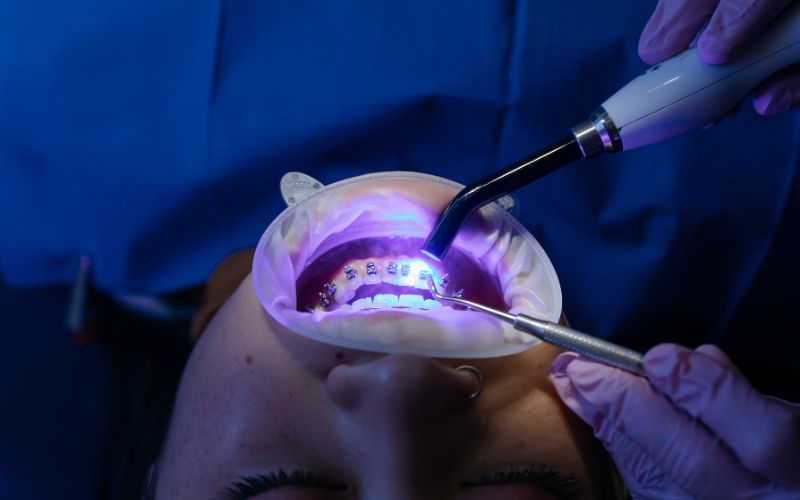
When you choose a professional whitening treatment at a dental clinic, your safety is completely controlled:
- Custom Protective Barriers: Before any whitening gel touches your teeth, your dentist applies a specialized liquid rubber dam or protective resin shield over your gums, lips, and cheeks.
- Meticulous Isolation: This isolation ensures that the highly concentrated bleach stays strictly on your enamel, entirely eliminating the risk of soft-tissue chemical burns.
- Desensitizing Agents: Professional formulas are often pre-mixed with potassium nitrate and fluoride, which help calm the nerve endings inside your teeth and drastically reduce post-whitening sensitivity.
Comparing the Two Whitening Approaches
To choose the right option for your lifestyle and budget, it helps to understand how the two methods perform across different areas:
- Treatment Speed: Professional in-office whitening can lift your smile by three to eight shades in a single clinical appointment lasting about an hour. Store-bought kits require daily application for two to four weeks to achieve a much milder shade change.
- Fit and Precision: Over-the-counter trays use a one-size-fits-all shape that fails to contact every groove of your teeth evenly. Professional take-home systems feature custom trays created from a 3D digital model of your mouth, ensuring absolute, uniform gel distribution.
- Stubborn Stain Removal: Low-grade consumer kits can only remove superficial surface stains left behind by food and drink. Deep, intrinsic discoloration trapped inside the tooth matrix requires the clinical strength of a professional treatment to break apart.
- Upfront Investment: Store-bought options have a much lower initial price tag, making them highly accessible. Professional systems require a greater financial investment upfront, but they yield vastly superior, longer-lasting results and preserve your enamel safety.
Achieving Radiant, Safe Results in Flushing, NY
Before undergoing any whitening treatment, it is vital to have a comprehensive dental exam. Bleaching agents should never be applied if you have active, untreated cavities or leaking dental restorations, as the gel can penetrate deep into the center of the tooth and cause severe nerve pain. Furthermore, whitening treatments do not alter the color of existing porcelain veneers, crowns, or tooth-colored fillings.
If you are ready to safely brighten your smile or want to explore our comprehensive preventive and cosmetic options, our clinical team is ready to assist you. Queen Crossing Dental creates personalized cosmetic treatment plans to help you achieve your aesthetic goals safely and effectively. Contact a friendly dentist in Flushing, NY today to schedule your consultation and uncover a healthy, confident smile.
FAQs
Q: Why do my teeth feel sensitive after using store-bought whitening strips?
A: Sensitivity occurs when the whitening peroxide penetrates the porous enamel layer and temporarily dehydrates the dentin underneath, stimulating the internal nerve. Store-bought strips often lack desensitizing ingredients, and without professional guidance, users frequently over-apply them, leading to prolonged enamel dehydration and pain.
Q: How long do the results of a professional teeth whitening treatment last?
A: On average, professional whitening results remain vibrant for one to three years. The ultimate longevity depends on your daily habits. If you regularly consume dark staining liquids like coffee or tobacco products, you will need periodic touch-ups to maintain your bright shade.
Q: Can charcoal toothpaste or baking soda replace professional whitening?
A: No. Charcoal toothpastes and baking soda are highly abrasive materials. While they might scrub away very minor surface stains, they actually wear down your protective enamel over time. As enamel thins, the yellowish layer of dentin beneath it becomes visible, making your teeth look darker in the long run.
Recent Comments