
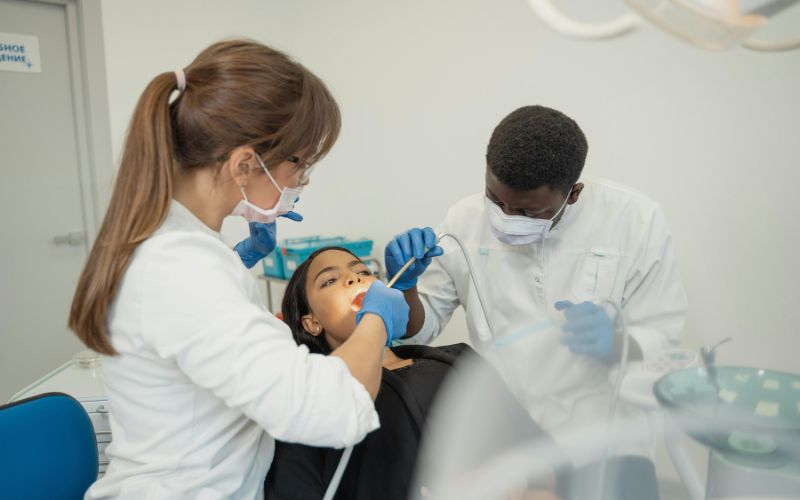
Ask most people what fluoride treatment is for, and they will describe a foam tray or a flavored varnish from a childhood dental visit. That association is not wrong, but it is incomplete. Fluoride is not a pediatric tool that adults age out of. It is a mineral that keeps working on tooth enamel for as long as you have teeth, and for a lot of adults, the years between 30 and 70 are exactly when they need it most.
Diet shifts, new medications, natural aging, and everyday wear all change how vulnerable your enamel is over time. Understanding what fluoride actually does, and who tends to benefit most from a professional application, can help you decide whether it belongs in your next dental exam and cleaning.
What Is Professional Fluoride Treatment?
Fluoride is a naturally occurring mineral that reinforces tooth enamel and helps prevent decay. Your teeth are in a constant, quiet back-and-forth between two processes:
- Demineralization happens when plaque bacteria and dietary acids strip minerals out of enamel.
- Remineralization happens when minerals such as fluoride, calcium, and phosphate are redeposited into that enamel from saliva, food, and water.
Daily products like fluoridated toothpaste and tap water support this cycle in small, steady doses. A professional fluoride treatment is a different order of magnitude. Applied as a gel, foam, or varnish directly onto the teeth, it delivers a concentrated dose that bonds to enamel within minutes, reinforcing weak spots and interrupting early decay before it becomes a cavity.
Why Adults Still Need Fluoride
There is a persistent myth that once adult teeth finish forming, enamel is essentially locked in and cavity-proof. Enamel does not work that way. It is under continuous wear from acidic foods, gum recession, dry mouth, and shifting overall health, and none of those pressures ease up with age; several of them intensify.
A professional fluoride treatment supports adult teeth by rebuilding weakened enamel at the microscopic level, slowing down decay that is still in its early, reversible stage, reducing sensitivity by strengthening exposed root surfaces, and protecting the margins around existing fillings and crowns where recurrent decay tends to start.
Who Benefits Most from Adult Fluoride Treatments?
Nearly any adult can benefit from added enamel protection, but a few groups see the clearest results.
Adults with Dry Mouth (Xerostomia)
Saliva does a lot of quiet, unglamorous work: neutralizing acid, washing away food particles, and delivering minerals back to enamel. Age, chronic stress, autoimmune conditions such as Sjögren’s syndrome, and a long list of common medications, including blood pressure drugs, antihistamines, and antidepressants, can all reduce saliva output. Less saliva means acid lingers longer on tooth surfaces, which is exactly the situation professional fluoride is designed to offset.
Patients with Receding Gums or Gum Disease
As gums recede, whether from age, aggressive brushing, or gum disease, the softer root surface of the tooth (cementum) becomes exposed. Root surfaces lack the hard enamel shell that covers the crown of a tooth, so they decay faster and are frequently more sensitive. Fluoride strengthens those exposed roots and can meaningfully reduce discomfort.
Adults with Multiple Restorations
If you have several dental fillings or dental crowns, the margin where the restoration meets natural tooth is a common entry point for new decay. Fluoride helps protect those seams and extends the working life of existing dental work.
Adults in Orthodontic Treatment
Brackets and wires create tight spaces where plaque accumulates easily. Adults undergoing Invisalign or traditional orthodontic treatment are more prone to developing white spot lesions, an early form of decalcification, and fluoride application during treatment helps guard against it.
Patients with Frequent Cavities or High Acid Intake
If you have had a new cavity in the past year, or you regularly drink coffee, wine, citrus juice, or sports drinks, your enamel is under frequent acid challenge. Fluoride gives it the extra defense needed to keep up.
How Is Professional Fluoride Applied?
A fluoride application is fast and painless, and it is usually the last step of a routine cleaning.
- Your hygienist cleans and dries your teeth.
- A varnish or gel is painted directly onto the tooth surfaces.
- The material sets almost immediately on contact with saliva.
You will typically be asked to avoid very hot foods, cold drinks, or brushing for a short window afterward, usually somewhere between 30 minutes and a few hours depending on the product used, so the fluoride has time to fully absorb into the enamel.
Professional Fluoride vs. At-Home Products
Over-the-counter fluoride toothpaste and tap water matter, and they should stay part of your daily routine. But they contain a fraction of the fluoride concentration used in a clinical application. Professional varnish continues releasing minerals into enamel for hours after it is applied, which is a meaningfully different level of protection for anyone in a higher-risk category. For patients facing an elevated cavity risk, a dentist may also prescribe a stronger daily fluoride toothpaste for home use between visits.
Fluoride and the Rest of Your Preventive Plan
Fluoride works on the whole tooth surface, which makes it a natural complement to more targeted preventive treatments. Patients with deep grooves in their molars often pair fluoride with dental sealants, since sealants block out fissures that fluoride alone cannot fully reach. If decay has already progressed past what prevention can reverse, your dentist may discuss restorative options ranging from a standard filling to inlays and onlays for more significant damage.
Strengthen and Protect Your Smile in Flushing, NY
Adding fluoride to your routine preventive care is a low-cost, low-effort way to preserve your natural teeth and head off bigger problems down the road. Whether you are dealing with dry mouth, gum recession, or sensitivity, a professional fluoride treatment offers protection tailored to your specific risk factors.
At Queen Crossing Dental, our exams and cleanings are built to catch these risk factors early. We proudly serve patients throughout Flushing, Whitestone, Bayside, and the surrounding communities.
FAQs
Is professional fluoride treatment safe for adults?
Yes. The fluoride used in a professional setting is precisely dosed and applied topically by a licensed provider, making it safe for adult patients.
How often should an adult get a fluoride treatment?
Depending on your individual cavity risk, your dentist may recommend fluoride at every routine visit, or on a 6- to 12-month schedule.
Will insurance cover adult fluoride treatments?
Coverage varies by plan; some cover fluoride only for children, while others extend it to adults considered high risk. Patients without coverage can ask about our in-house dental plan for affordable preventive care.
Can fluoride help with tooth sensitivity?
Yes. Fluoride helps seal the microscopic tubules in exposed dentin, blocking the hot, cold, or sweet triggers that reach the nerve of a sensitive tooth.
Curious whether fluoride treatment fits your preventive plan? Schedule a visit with Queen Crossing Dental, or read more about our fluoride treatments.
Recent Comments