
If you feel self-conscious about gaps or spaces in your smile, you are not alone. Gapped teeth, clinically known as a diastema, can occur for several reasons, ranging from genetics to habits like thumb-sucking. While many people seek treatment for cosmetic reasons, closing these spaces is also highly beneficial for your long-term oral health, as food particles and bacterial plaque love to hide in wide gaps.
The short answer is yes, Invisalign can highly effectively close gaps between teeth. In fact, mild to moderate spacing issues are among the most common conditions treated with clear aligners today.
How Invisalign Closes Spacing Issues
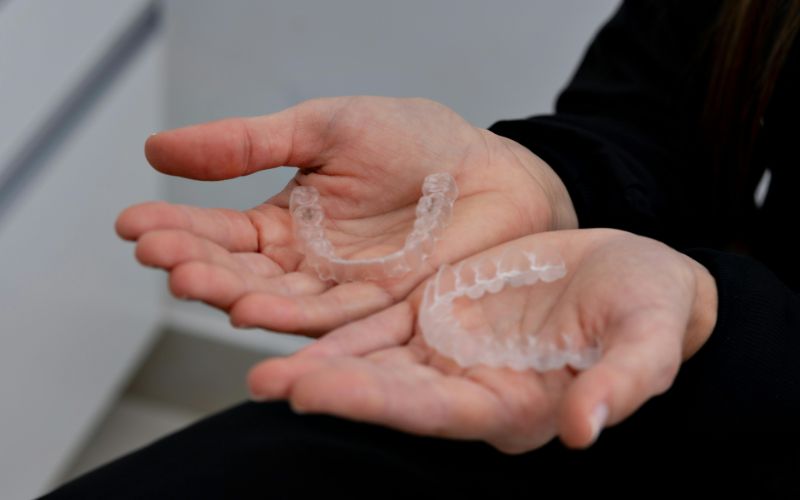
Traditional braces rely on a system of metal brackets and wires to physically pull teeth together. Invisalign achieves the same goal using a series of custom-made, clear plastic aligners.
When you begin your treatment, your dentist takes a high-resolution 3D digital scan of your mouth. Advanced planning software maps out the exact micro-movements required to guide your teeth into their ideal positions.
Each set of aligners is precisely engineered to exert a continuous, gentle force on specific teeth. As you swap to a new set of clear trays, typically every one to two weeks, your teeth incrementally shift closer together, gradually erasing the gaps.
The Biological Process of Closing a Diastema
To understand how Invisalign works, it helps to understand how teeth move inside the jawbone:
- Pressure and Remodeling: The clear aligner places targeted pressure on one side of the tooth.
- Bone Breakdown: On the side receiving the pressure, specialized cells called osteoclasts break down a tiny amount of bone tissue to make room for the tooth to move.
- Bone Rebuilding: On the opposite side, cells called osteoblasts build new bone tissue to fill in the space the tooth just left behind, anchoring it securely into its new position.
Because Invisalign uses a highly controlled sequence of trays, this process happens safely, smoothly, and with significantly less physical discomfort than traditional metal archwires.
Factors That Determine Success
While clear aligners work exceptionally well for most spacing issues, the overall timeline and complexity depend on a few critical factors:
1. The Size of the Gap
Small to moderate gaps (less than 6mm total across the arch) are perfectly suited for clear aligner therapy. If a gap is exceptionally wide or caused by severe skeletal jaw discrepancies, it may require a combination of treatments or traditional orthodontic appliances.
2. The Underlying Cause of the Space
If your gap is caused by a hyperactive labial frenum, which is the small piece of tissue that connects your upper lip to your gums, the tissue can act like a rubber band, pushing the front teeth apart. In these cases, a quick, minor procedure called a frenectomy may be recommended alongside Invisalign to prevent the gap from opening back up later.
3. Patient Compliance
Because Invisalign aligners are completely removable, the success of your treatment depends entirely on you. To close your gaps on schedule, you must commit to wearing your clear trays for 22 hours a day, removing them only to eat, drink anything other than water, and perform your oral hygiene routine.
Why Closing Gaps Matters Beyond Aesthetics
While a seamless smile is a fantastic confidence booster, addressing a diastema provides major functional benefits to your overall wellness:
- Protects Gum Tissues: Wide spaces leave delicate gum tissue completely exposed to hard, crunchy food debris. This continuous friction can cause localized gum recession.
- Reduces Plaque Accumulation: Gaps frequently act as traps for food. If these areas aren’t cleaned meticulously, the trapped debris feeds harmful oral bacteria, increasing your risk of localized tooth decay and gum inflammation.
- Improves Bite Alignment: Closing spaces helps evenly distribute bite forces across all your teeth, preventing premature wear and minimizing strain on your jaw joints.
Achieving Lasting Results in Flushing, NY
Once your Invisalign treatment successfully closes your gaps, the final and most important step is retention. Teeth have a natural orthodontic memory and will want to drift back toward their original positions. Wearing a custom, clear retainer at night ensures your beautifully aligned smile remains locked in place for decades.
If you are ready to explore how clear aligners can transform your smile or want to learn more about our comprehensive orthodontic and clear aligner services, our clinical team is here to help. Queen Crossing Dental specializes in delivering personalized treatment plans tailored to your specific goals. Contact a welcoming dentist in Flushing, NY today to schedule a comprehensive evaluation and start your journey toward a healthy, confident smile.
FAQs
Q: How long does it take for Invisalign to close a gap?
A: For minor gaps, you may start seeing noticeable progress within just a few weeks. A complete treatment plan to close moderate spacing typically takes anywhere from 6 to 18 months, depending entirely on the complexity of your bite and how consistently you wear your aligners.
Q: Can Invisalign close a gap if I am missing a tooth?
A: If a gap is caused by a completely missing adult tooth, Invisalign is often used to orchestrate the movement of the surrounding teeth, perfectly preserving the exact amount of space needed for a future dental implant restoration.
Q: Is Invisalign painful when closing gaps?
A: Most patients describe the feeling as a mild sensation of pressure or tightness rather than pain. This feeling is completely normal and is a reassuring sign that the aligners are doing their job. It typically fades within the first 48 hours of switching to a fresh set of trays.
Recent Comments